Frying smells from the flat below at dinner time, cigarette smoke rising into the bedroom, a sewer smell in the bathroom, cellar air as soon as the unit starts: after servicing, this is the request we are called about most. In the great majority of cases, the ventilation is not the cause of the smell, it is its path.
That path can be found. A damper that no longer closes between two flats, a neighbour's hood connected to the shared riser, a dry condensate trap, a filter saturated with grease, a duct disconnected behind a kitchen cabinet: each cause leaves traces that an on-site diagnosis brings out in about an hour.
We work on extract-only systems, heat-recovery systems and the shared extract risers of apartment buildings. When the cause is in a neighbour's flat or in the common parts, you leave with a written report to pass to the building manager or the owner, instead of an invoice for a cleaning that would have changed nothing.
Servicing or diagnosis: which one to book?
What this service costs
One price per system, published before you book, with no questionnaire to fill in to get it. Anything out of the ordinary (a lot of valves, an unreachable unit, a system never opened) we tell you before the visit, never on the invoice.
Breakdown, call-out and diagnosis
Noise, stoppage, lost airflow. One hour on site to find the cause.
€120
Extract ventilation service
System C: mechanical extract from wet rooms, façade vents for supply.
€139
Heat-recovery ventilation service
System D: filtered fresh air to living spaces, with heat recovery.
Autumn holiday offer Until 8 November. During the school holidays you are home more often: the right time for a service, before winter.
€159
Prices exclude VAT. 6 % on servicing in a private home over ten years old, 21 % otherwise.
What the service covers
Locating the smell
Which room, what time, which vent, what weather. This record, made with you, steers everything else: a smell at fixed hours does not have the same origin as a permanent one.
Checking vents and dampers
Every vent is removed: direction of airflow, backdraught damper, grease, actual connection behind the grille. A vent that blows instead of extracting is the most common sign of backflow from the riser.
Unit, filters and trap
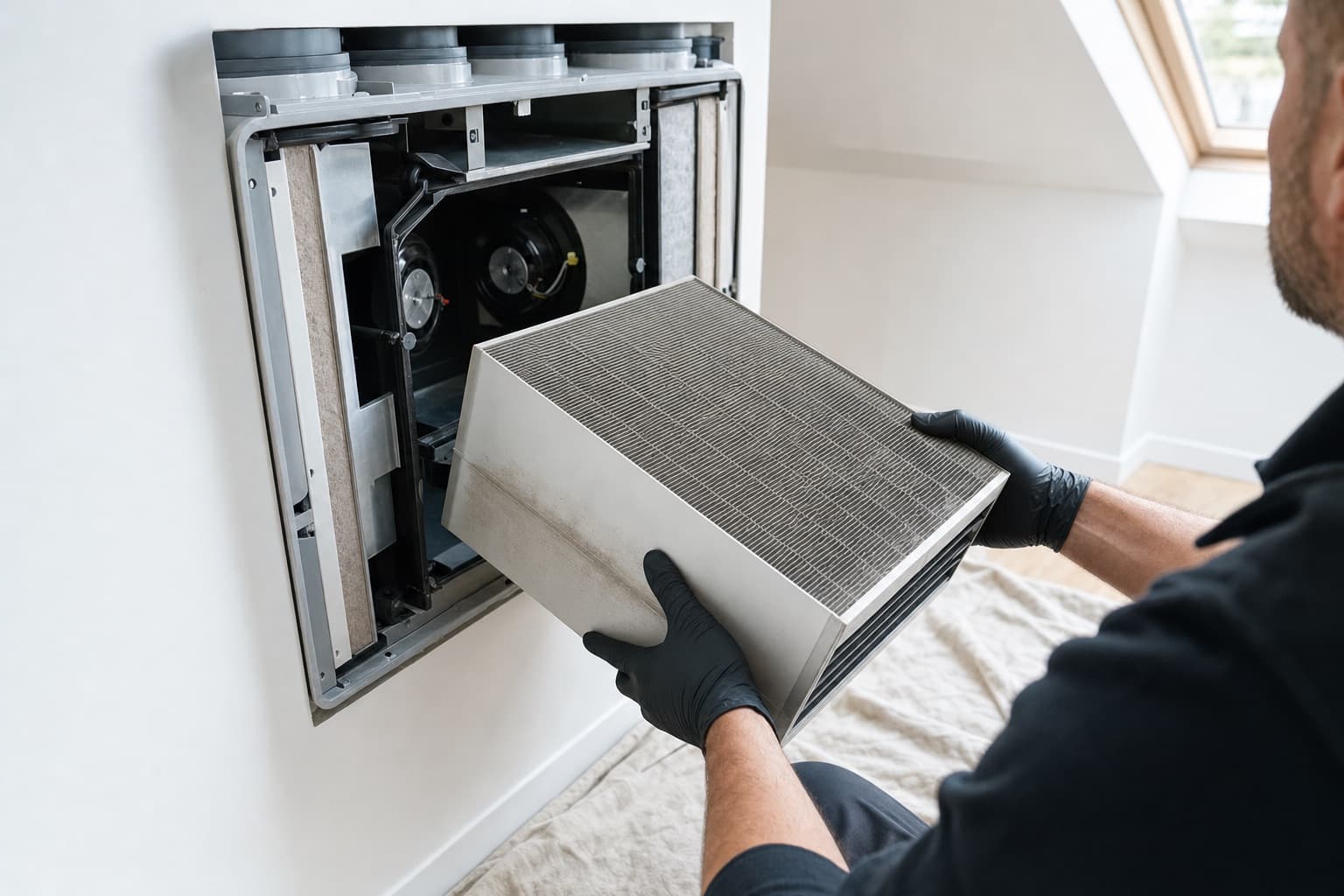
Filters saturated with smells, a fouled heat exchanger, a condensate tray with a dry trap: three causes of musty or sewer smells that can be dealt with on the spot.
Ductwork and connections
Looking for a disconnected, pierced or crushed duct in false ceilings and behind furniture, and for a hood or tumble dryer connected where it should not be.
Air intake and outdoor exhaust
A fresh-air intake placed near a kitchen exhaust, a chimney or a bin store brings the outdoor smell indoors. We check both sides of the façade.
Written report and remedy
What was found, what was done on site, and what falls to the neighbour, the building manager or the owner, with the facts to explain it to them.
How the visit works
- 1
Describe the smell
Cooking, cigarette, sewer, musty; permanent or at certain hours; one room or the whole home; flat or house. Those four answers already tell us where to look.
- 2
On-site diagnosis
About an hour, vent by vent, unit included. Where possible we reproduce the smell, by running the hood or closing doors, to watch it appear.
- 3
Immediate remedy where one exists
Trap refilled, damper repaired, vent cleaned, duct reconnected: what can be done within the hour is done within the hour. A part or filter that needs replacing is announced with its price before it is fitted.
- 4
Quote if the remedy is heavier
Duct cleaning, replacement of a shared damper, fitting of vents with dampers, correction of a connection: priced in writing, you decide.
- 5
A report to pass on if it is not your home
When the smell comes from the shared riser or another dwelling, the report describes what we measured and observed, so the building manager or neighbour acts on the right cause.
Neighbours' cooking or cigarette smells: the apartment case
In an apartment building, the kitchens and bathrooms of every floor are often connected to the same extract riser, with a roof fan or one unit per dwelling. When the fan weakens, when a neighbour connects a motorised hood to the riser or when a damper no longer closes, the smell-laden air looks for the easiest way out: the vent of the neighbouring flat, often on the ground floor or the top floor.
The remedy depends on the cause, and it is not always in your home. A vent with a backdraught damper, or a well-adjusted humidity-controlled vent, is often enough to protect your dwelling. A hood connected without authorisation or a worn-out shared fan fall to the building manager: our report gives them what they need to act.
- Vent by vent: airflow direction, damper seal, grease deposits.
- Reproducing the phenomenon: hood running, doors closed, depending on the wind.
- Protecting your home: damper vent, adjustment, sealed connection.
- A report for the building manager when the cause is in the common parts.
Ventilation in a flat: where your responsibility stops and the co-ownership's begins
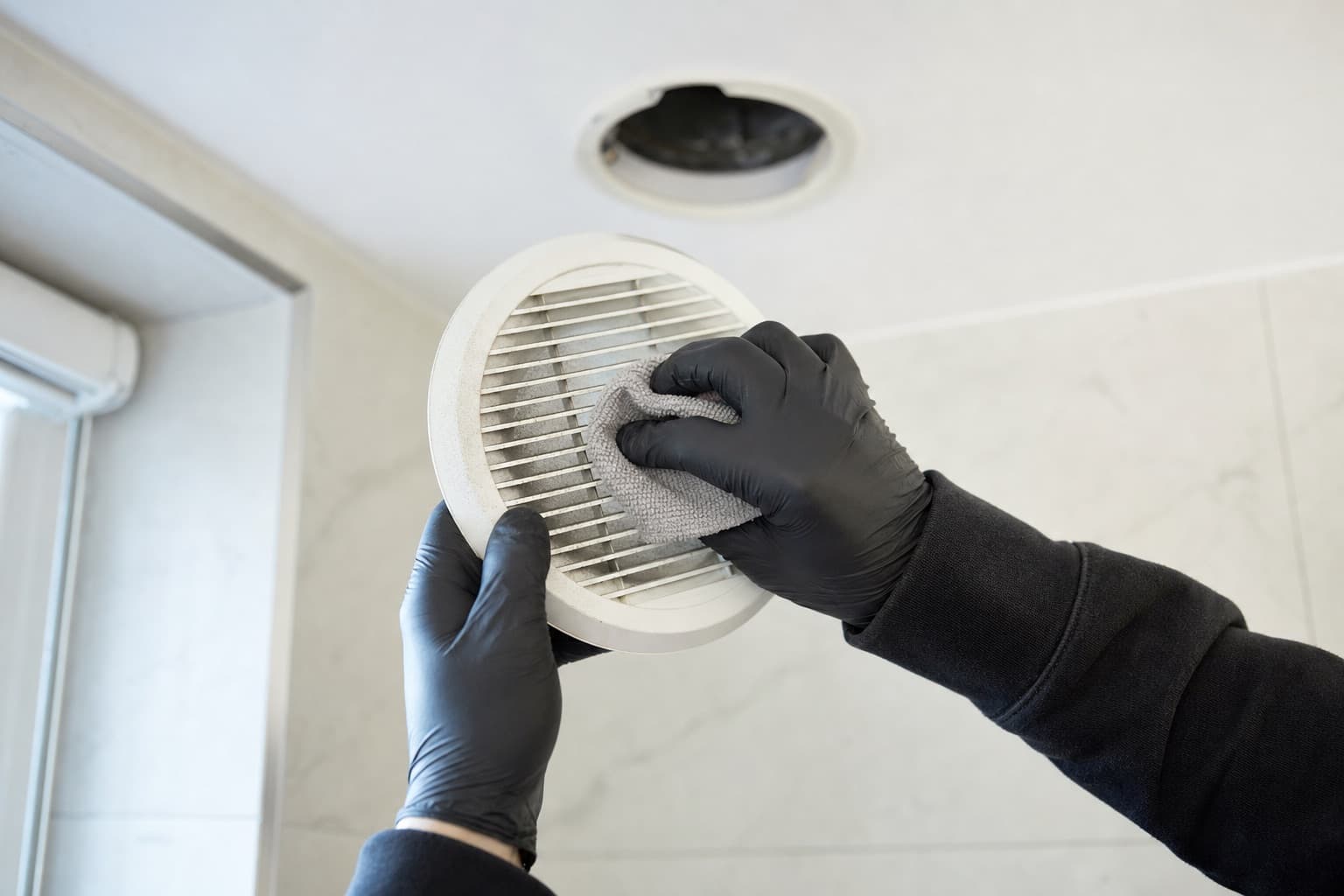
Sewer, musty or cellar smell: your own installation
A sewer smell in the bathroom most often comes from a trap: the one under a rarely used shower, or the one on the condensate tray of the heat-recovery unit, which dries out in summer and lets air rise from the drains. A musty or cellar smell when the unit starts points to a saturated filter, a fouled heat exchanger or ducts that have never been cleaned: the fresh air passes over the dirt before reaching the bedrooms.
These causes are dealt with during a service, and that is what we recommend when the smell comes from your home. When the ducts themselves are the cause, duct cleaning is priced separately, after inspection.
- Condensate trap refilled and drain checked.
- Filters, heat exchanger and fans: condition recorded, cleaning or replacement proposed.
- Fresh-air intake: position relative to exhausts, cleanliness, grille.
- Ducts: inspection when the smell persists after everything else.
Hood, tumble dryer, stove: smells caused by a wrong connection
An extracting hood connected to the ventilation duct sends grease and smells through the whole network and ends up fouling it. A vented tumble dryer or a stove whose flue terminates near a fresh-air intake contaminates the supplied air. These set-ups are mostly found after kitchen works or when a new occupant moves in.
We identify them and propose the correction: separating the networks, moving an air intake, replacing an extracting hood with a recirculating one when the ventilation cannot accept it.
Open kitchen, strong smells: why the cooker hood is not enough
Frequently asked questions
My neighbour's cooking smell comes into my flat through the ventilation. Is that normal?
No, but it is common in buildings with a shared riser. A vent without a damper, or whose damper no longer closes, lets air flow back towards you when the pressure changes: the neighbour's hood running, a weak shared fan, wind. A vent with a backdraught damper or a humidity-controlled vent, fitted after checking the airflow direction, solves most cases. If the cause is a hood connected to the riser, it has to be disconnected, which goes through the building manager.
Could the problem come from the common parts? What should I do?
Yes. A worn-out roof fan, a fouled riser, another dwelling's hood connected to it: all causes you cannot deal with alone. Our report describes what was observed and measured in your home, so the building manager can commission work on the riser. You do not have to prove yourself where the smell comes from.
The bathroom smells of sewer, is it the ventilation?
Often indirectly. The ventilation puts the bathroom under slight negative pressure: if a trap is dry (a spare shower, the unit's condensate tray), it draws air from the drains through it. Filling the trap is sometimes enough, but if the smell returns, the condensate drain and the tightness of the waste pipework need checking.
Will duct cleaning fix the smell?
Only if the smell comes from the ducts, which is the case when it appears at start-up and smells musty or of hot dust. A cooking or cigarette smell from a neighbour does not go away with cleaning: it comes back at the next meal. That is why we diagnose before we clean.
How much does the diagnosis cost?
The call-out, travel and diagnosis, is €120 excl. VAT: an hour on site and a written report. If the smell comes from your own installation, the service (from €139 excl. VAT) is often the better choice, because it includes the diagnosis and fixes the most common causes in the same visit. Any additional part or work is announced with its price before it is undertaken.
I am a tenant: who pays?
Routine ventilation servicing generally falls to the tenant, repairs and replacement parts to the owner, and anything concerning the common parts to the co-ownership. Our report separates the three, which makes the conversation easier. We invoice the person who orders the intervention.
Related services
- Ventilation repairDiagnosis first, repair second. We only replace a unit when that is genuinely the right call.
- Ventilation maintenanceA serviced ventilation system uses less energy, runs quieter and actually removes the moisture from your home.
- Duct cleaningCleaning the valves achieves nothing if the ductwork behind them is fouled. We treat the duct along its full length.
A question about this service?
Describe your system: we tell you whether this service is the right answer to your situation, or whether something else is needed.