What VMCD does differently
What most servicing companies don't offer.
Evenings and weekends too
Weekday afternoons, but also evenings until 8 pm and weekends. You pick the time that suits you, with no day off needed.
The price before you book
€159 for heat recovery, €139 for extract ventilation, excl. VAT. No quote to wait for by email: you pick your slot online, in two minutes.
Pay afterwards, written report
Nothing to pay online: you pay on site once the work is done, and you receive a written report of the visit.
Before / after
What a service changes, in pictures
Photos taken by our technicians on recent jobs, unedited.
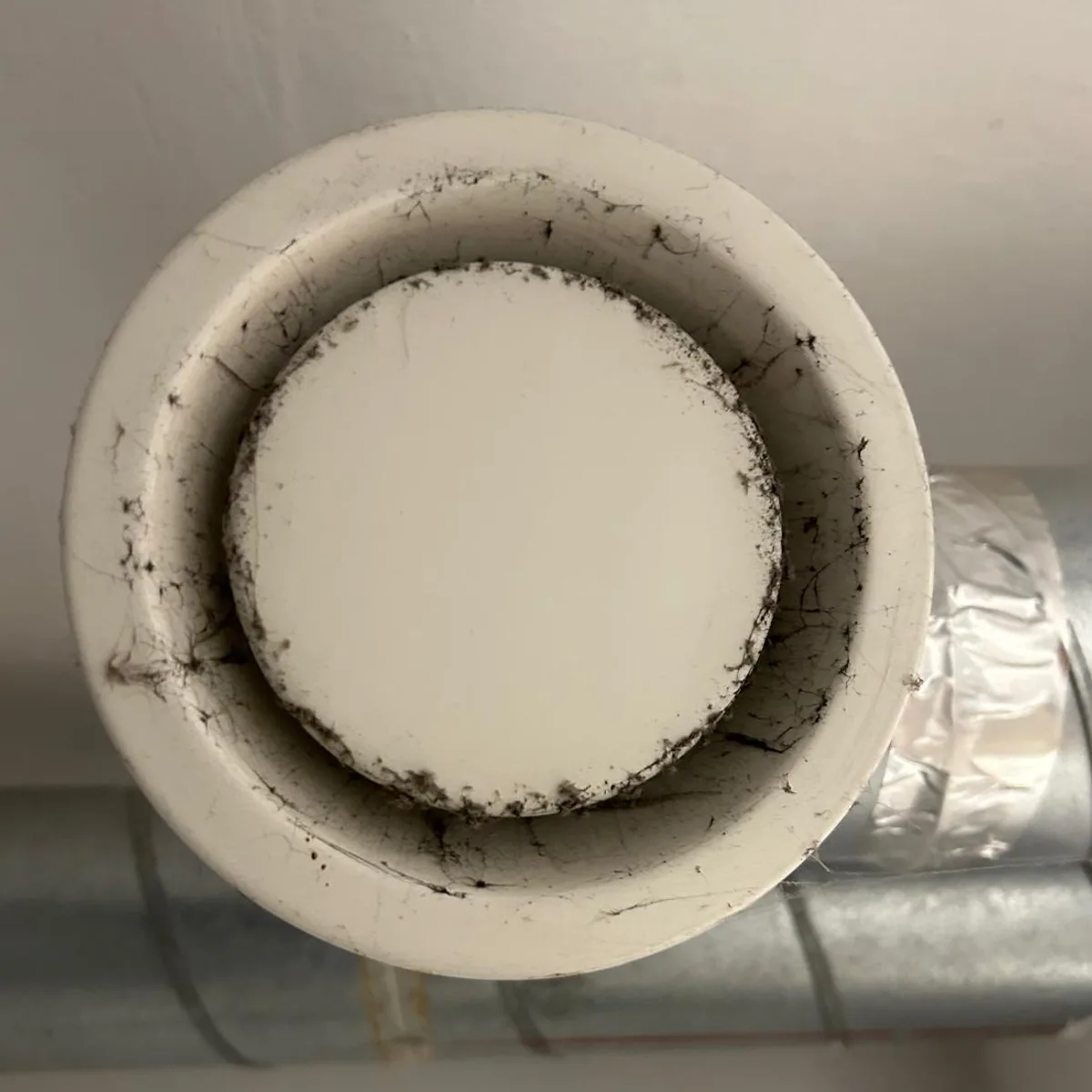 Before
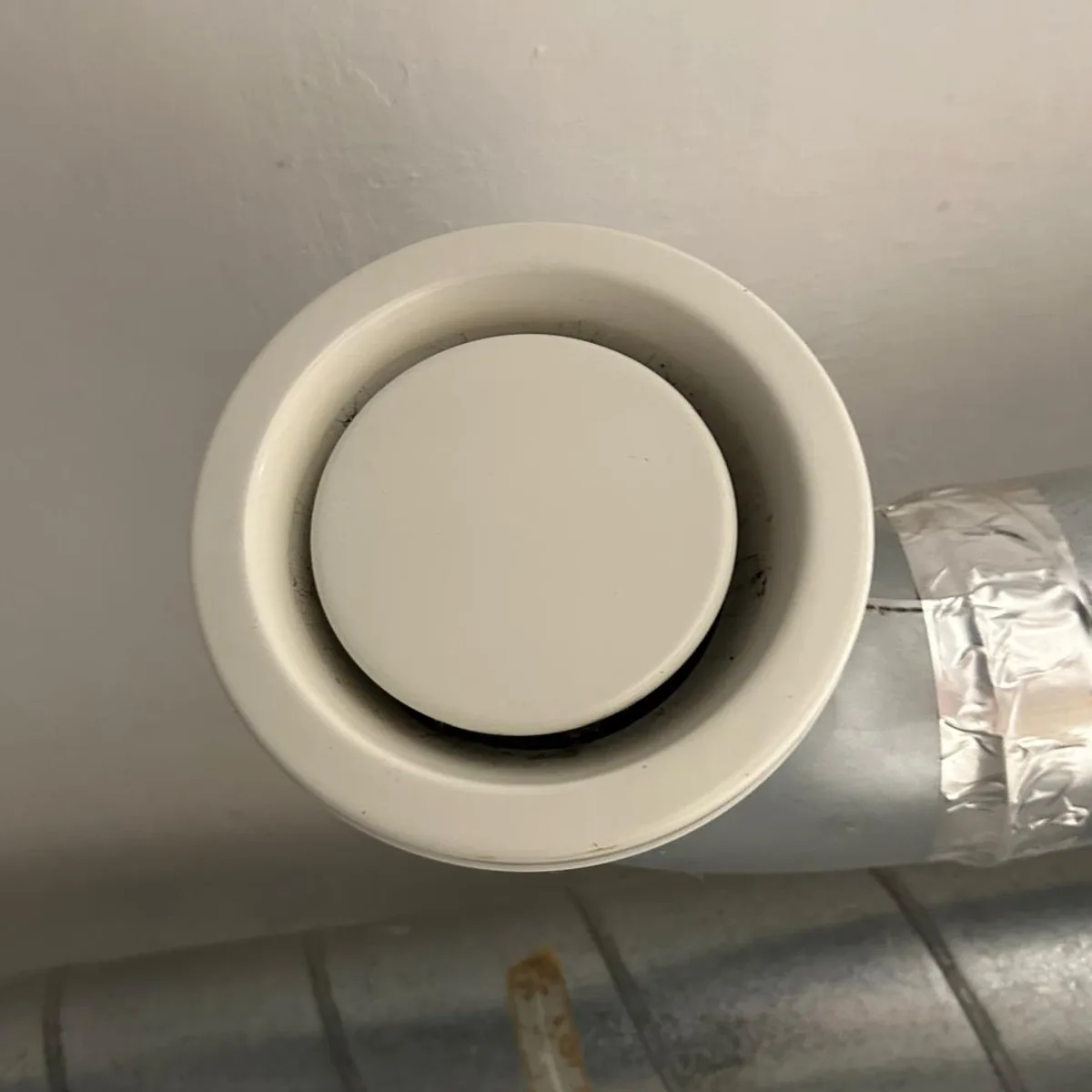 After
AfterCeiling extract valve, heat-recovery unit in a flat 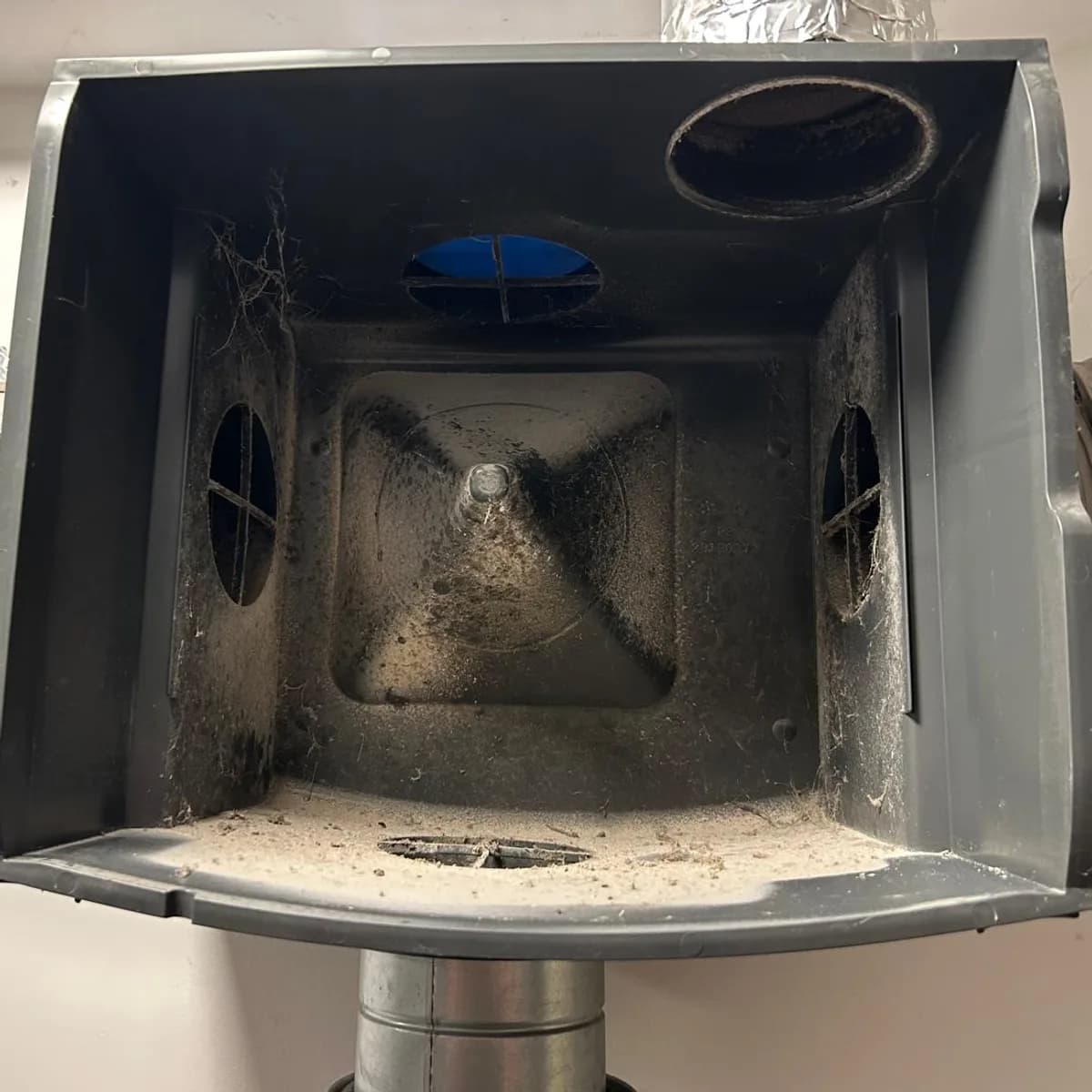 Before
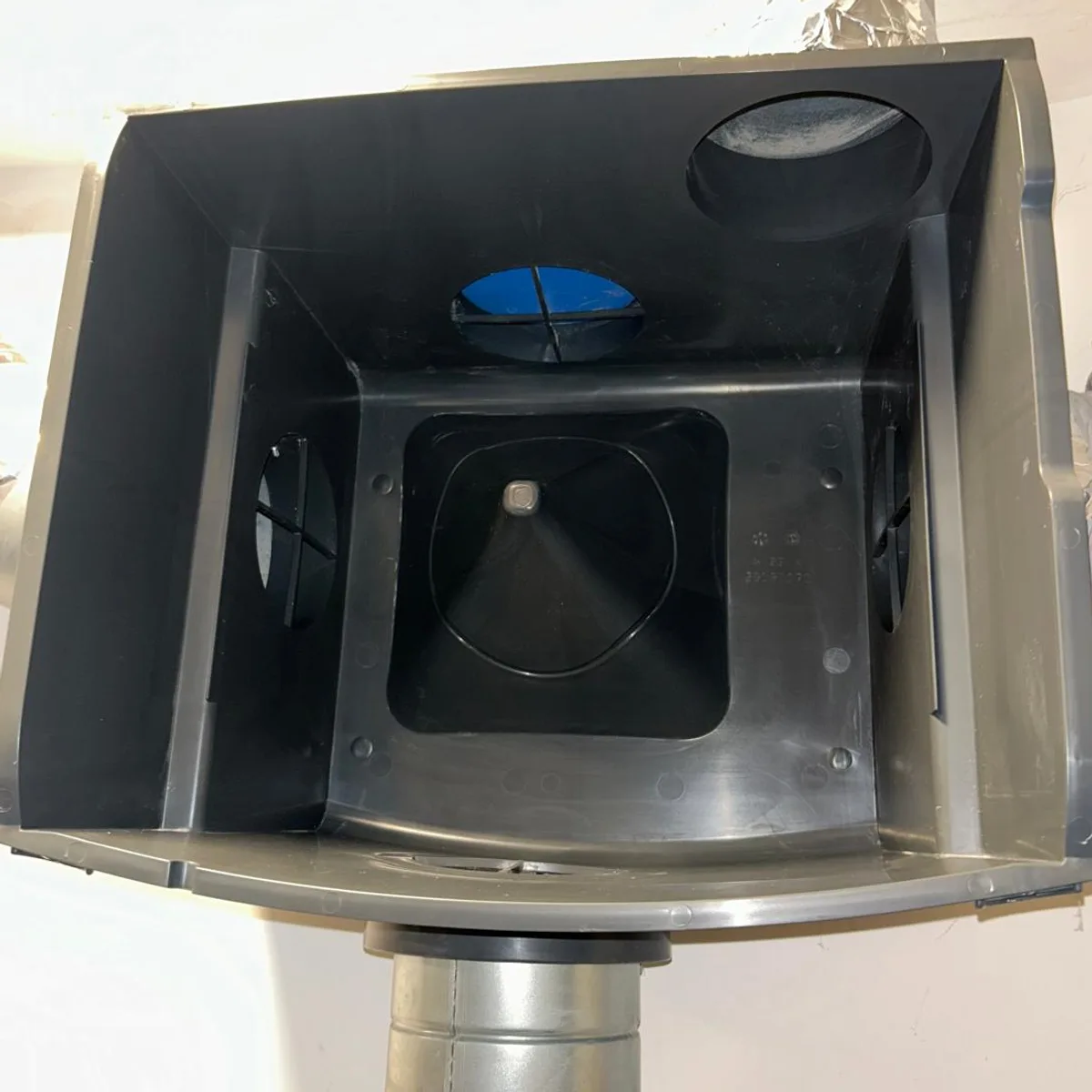 After
AfterInside the casing of an extract-only unit 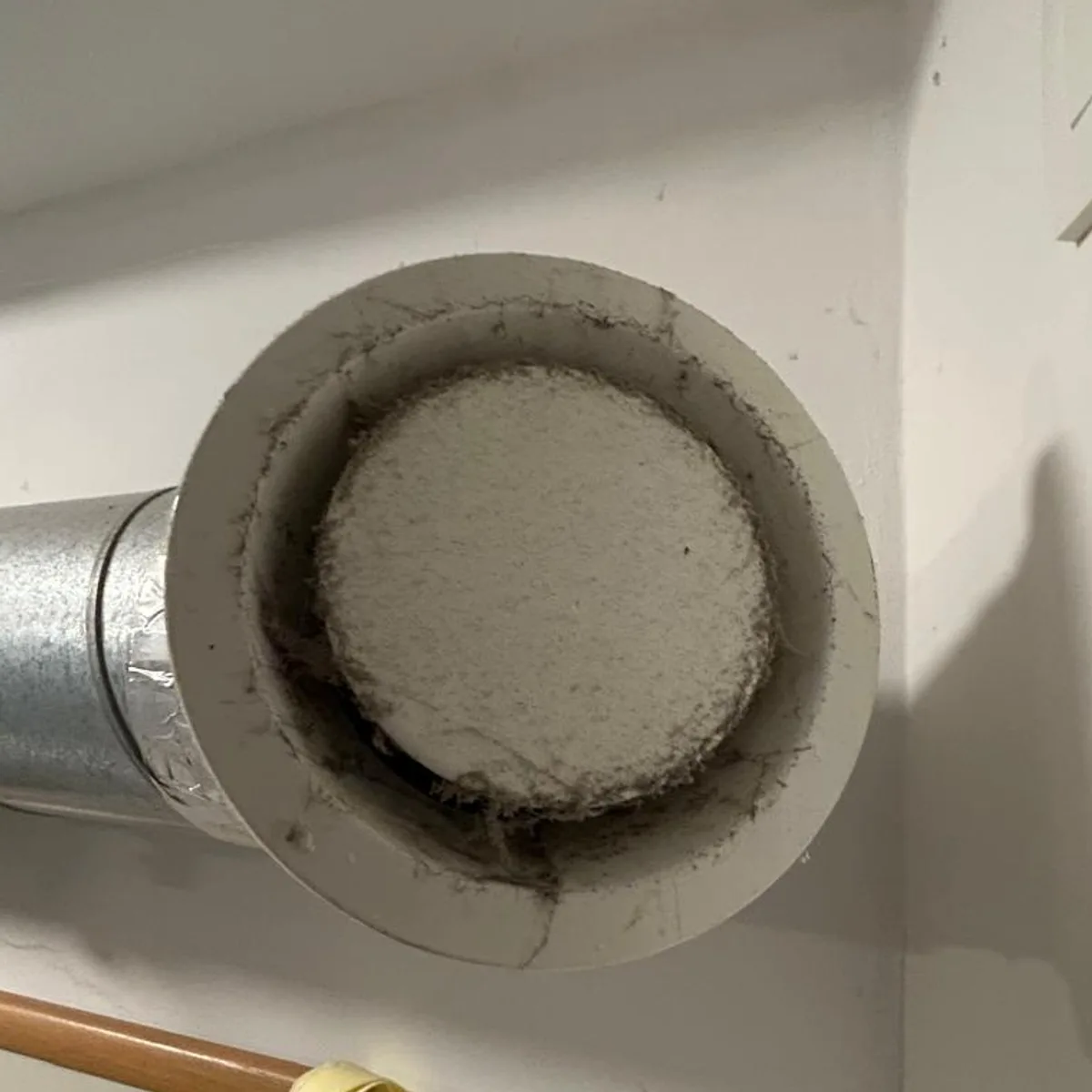 Before
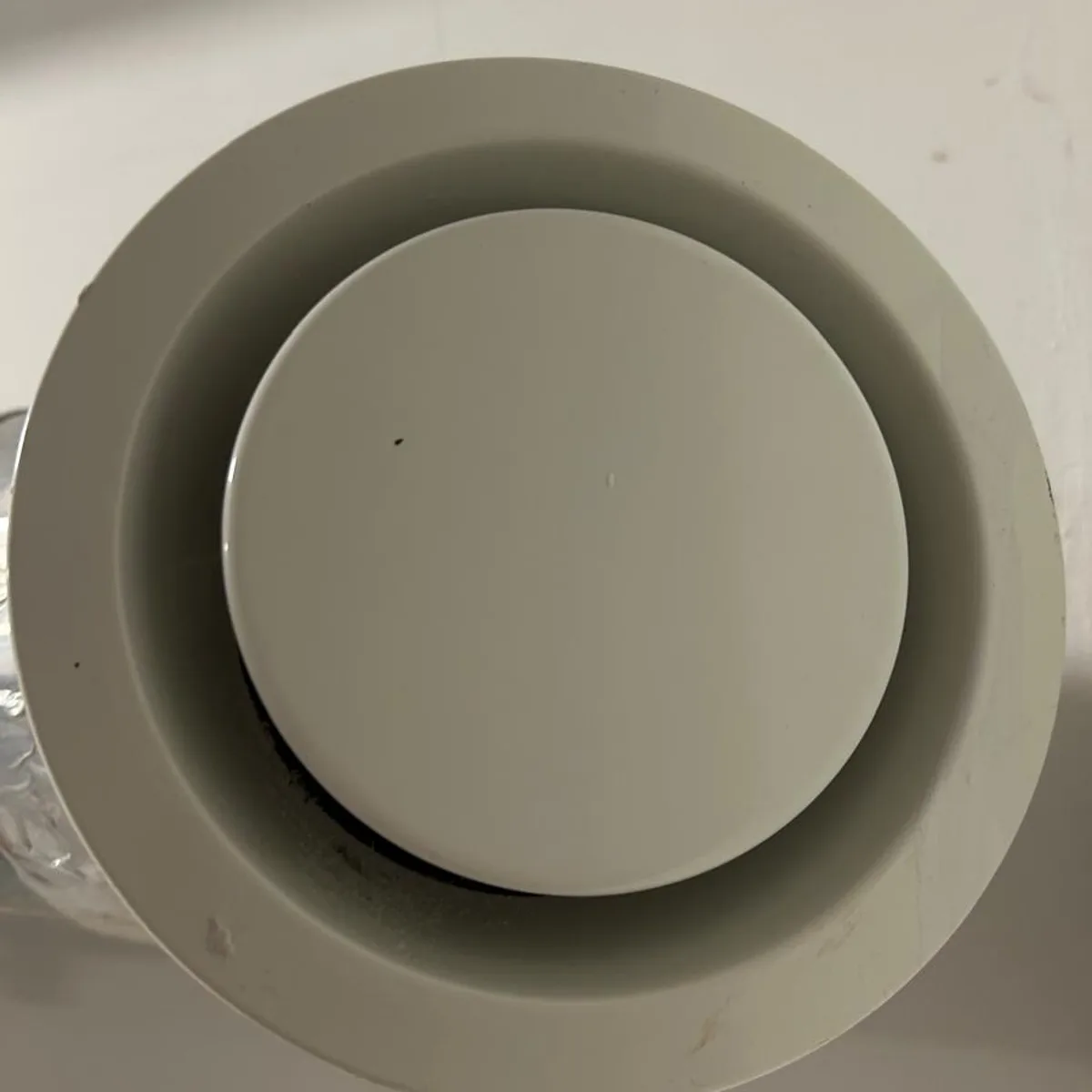 After
AfterWall extract valve, heat-recovery unit 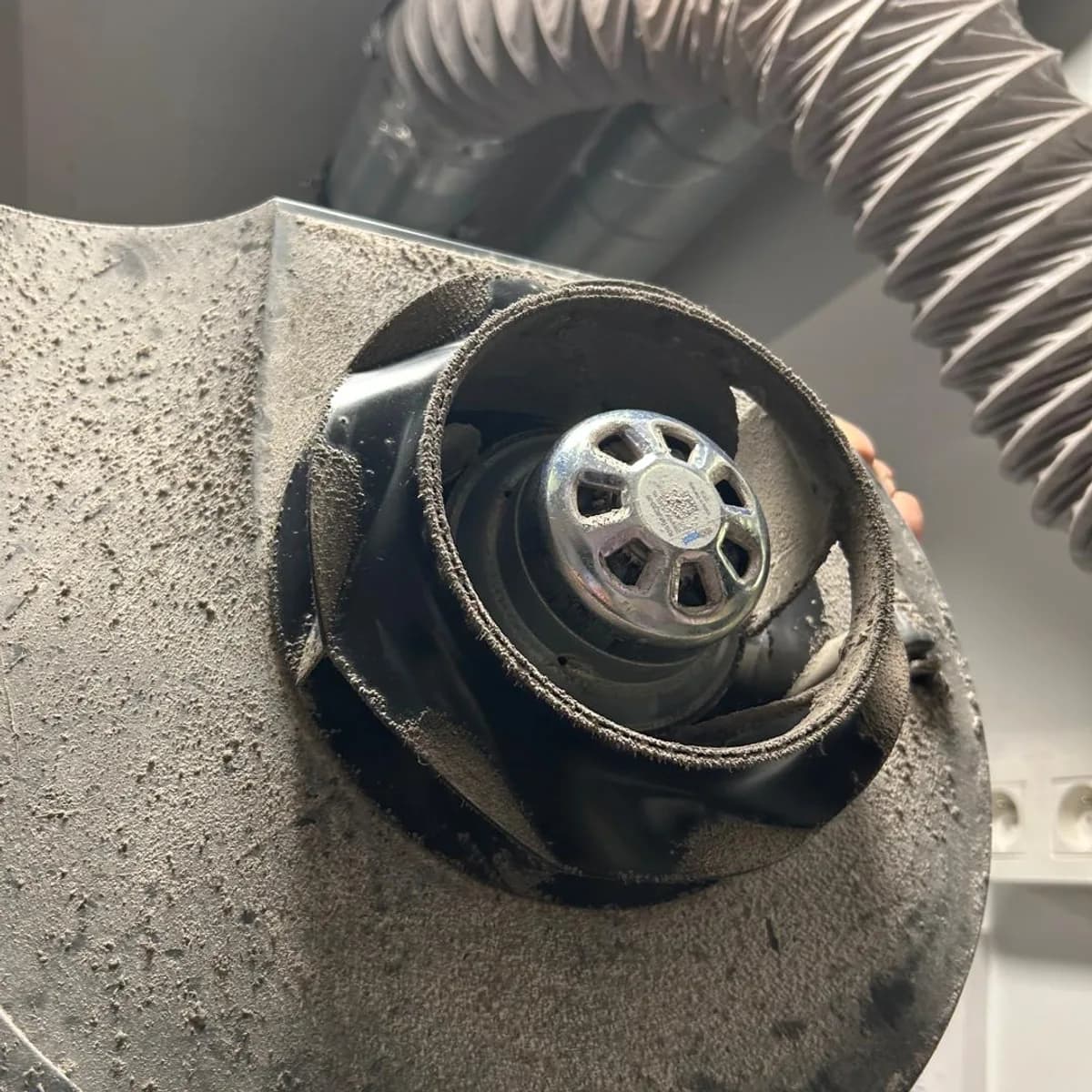 Before
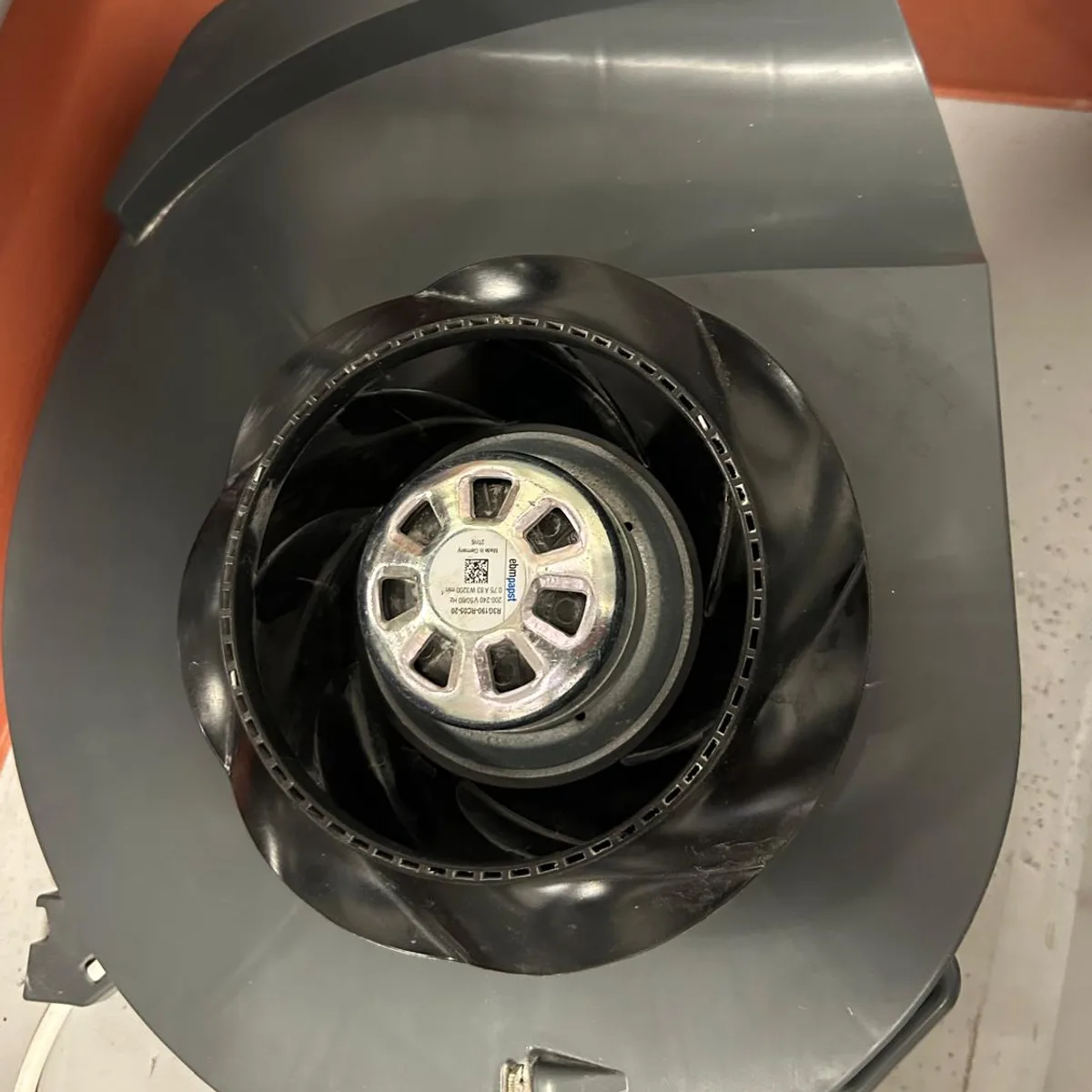 After
AfterImpeller and motor of a heat-recovery unit
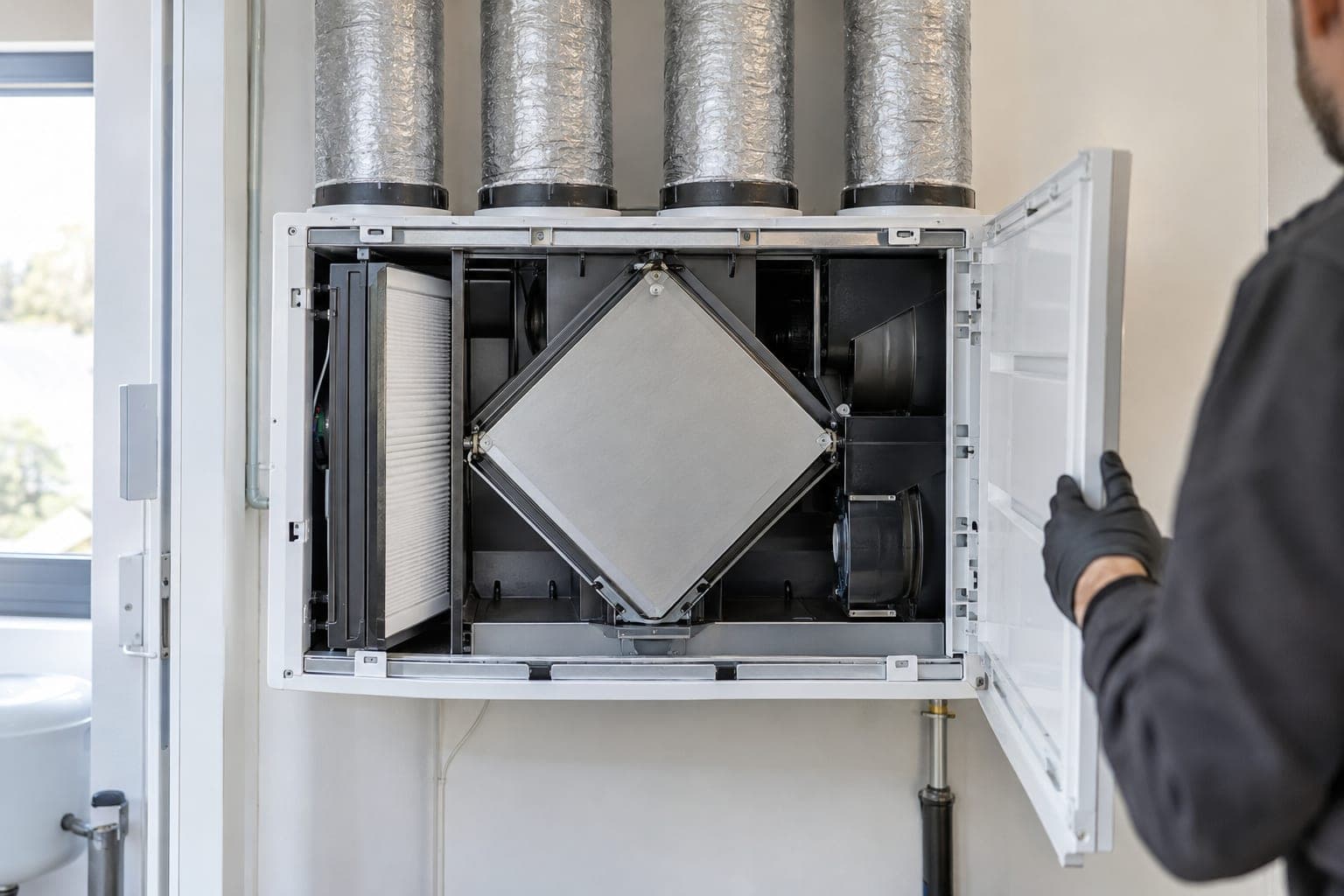
Servicing a ventilation system means thoroughly cleaning the unit and the heat exchanger, checking the condensate drain, the motor and the controls, then sending you a service report. The price is fixed and shown before you book: 159 € excl. VAT for heat recovery (system D) until 8 November (autumn holiday offer), 139 € for extract ventilation (system C). Valve cleaning and airflow measurement are optional.
A ventilation system runs continuously, often for years, with nobody touching it. Filters clog, valves foul up, the heat exchanger fills with dust, and airflow drops without anything flagging it. The system still runs, but it no longer ventilates.
We service heat-recovery (system D, MVHR) and extract (system C) systems from the brands commonly found in Belgium, in houses and flats, as well as ventilation in apartment buildings and small offices.
No legal requirement, but a genuine technical one
What this service costs
One price per system, published before you book, with no questionnaire to fill in to get it. Anything out of the ordinary (a lot of valves, an unreachable unit, a system never opened) we tell you before the visit, never on the invoice.
Extract ventilation service
System C: mechanical extract from wet rooms, façade vents for supply.
€139
Heat-recovery ventilation service
System D: filtered fresh air to living spaces, with heat recovery.
Autumn holiday offer Until 8 November. During the school holidays you are home more often: the right time for a service, before winter.
€159
Prices exclude VAT. 6 % on servicing in a private home over ten years old, 21 % otherwise.
What the service covers
Unit and heat exchanger cleaning
Casing stripped down, impellers de-dusted, plate or rotary exchanger cleaned, condensate tray and drain checked.
Valves, optional
15 €, ticked when you book. Extract and supply valves removed, cleaned and refitted without altering their original setting, a frequently missed detail that unbalances the whole system.
Airflow measurement, optional
Room-by-room measurement with a flow meter, added for 20 € when you book. Readings are compared with the design flow rates (NBN D50-001) and recorded in the report: that is what reveals an anomaly and confirms the system is doing its job.
Electrical and mechanical checks
Motor, bearings, direction of rotation, humidity and CO₂ sensors where fitted, and the controls (switch, remote, home automation).
Service report
A written document covering the condition found, the parts replaced, our recommendations, and the measured airflow if you took the option. Useful for a building manager, a landlord or a future sale.
How the visit works
- 1
Survey
We identify the system type and its installation date where known, and record the state we find it in.
- 2
Cleaning
Unit, fans, heat exchanger, condensate tray and external grilles, plus the valves if you took the option.
- 3
Replacement
Parts to replace only after you approve a quote.
- 4
Balancing and final check
Valves adjusted if needed, noise level check, and fresh airflow readings if you took the option.
- 5
Service report
We explain what was done, then send you the report: what to keep an eye on and when the next service is due.
MVHR servicing: what we check
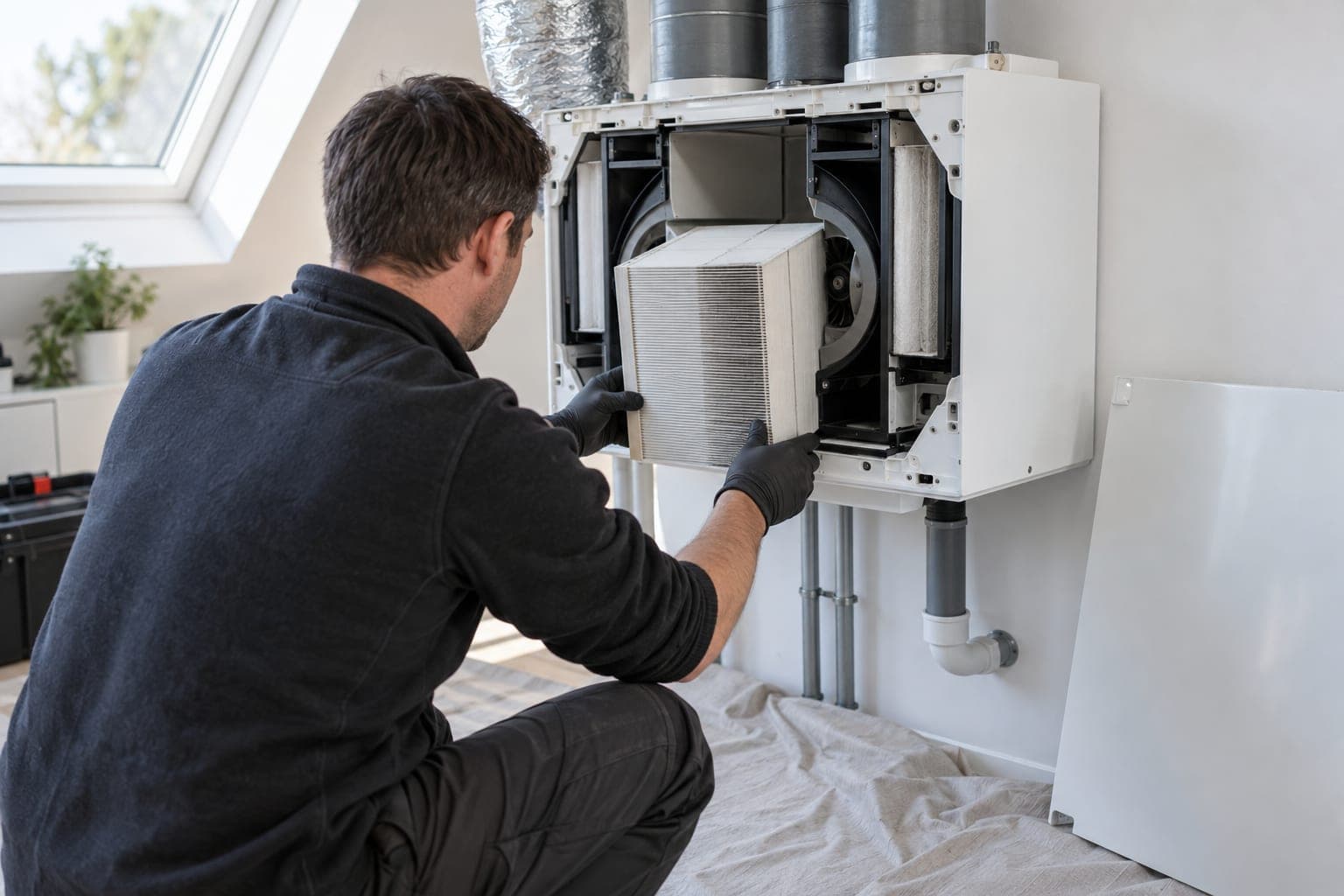
A heat-recovery system has two fans, two duct networks, two filters and a heat exchanger. The exchanger is the whole point of the system: it warms incoming fresh air with heat from the extracted air. Once fouled, it recovers less, and the fans work harder to move the same volume of air.
- The heat exchanger: taken out of the casing where the model allows, cleaned to the manufacturer's instructions, seals and plates checked.
- Both fans: impellers de-dusted, noise and vibration checked.
- The condensate tray and drain: a dry trap lets smells back in, a blocked one makes water overflow under the unit.
- The summer bypass: we check that it opens, otherwise the house warms up at night instead of taking in cool air.
- The fresh-air intake and exhaust outlet: leaves, pollen and birds' nests build up there and choke the whole system.
Extract ventilation servicing
Extract ventilation has a single fan drawing air out of the kitchen, bathroom and toilet. Fresh air comes in through vents in the windows or façade. It is simpler than heat recovery, but it deteriorates the same way: silently, through fouling.
- The extract unit: impeller de-dusted, motor and speeds checked.
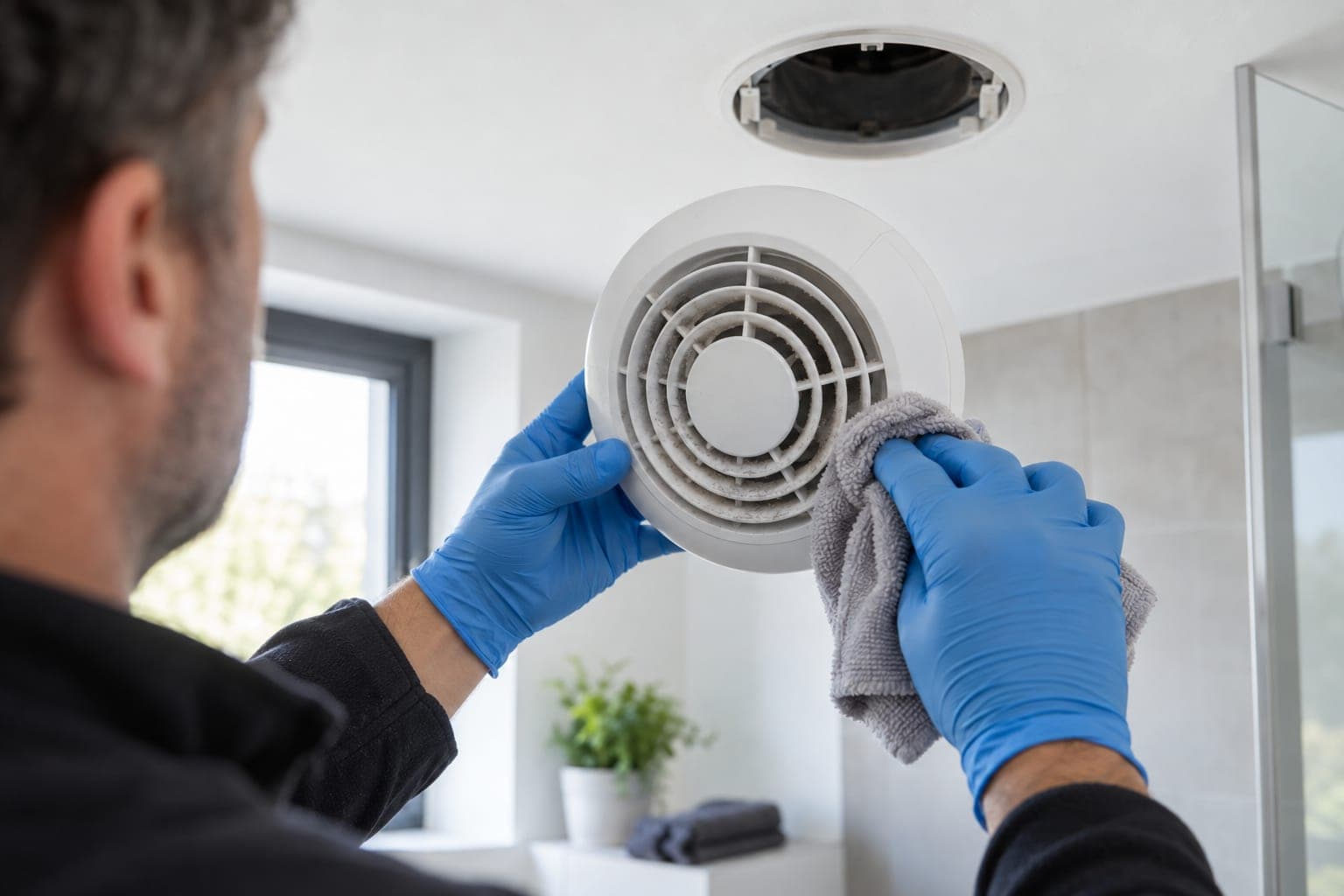
- The valves, optional: removed and cleaned without wetting the humidity sensor that drives humidity-controlled valves, then set back to their position.
- The trickle vents: often closed or blocked. Without them, the system pulls air through gaps and under doors.
- The roof or wall outlet, and the connection between the unit and the ducts.
Window and façade air vents: why not block them and how to make them bearable
Why servicing matters: what deteriorates unseen
A clogged filter restricts the air. Recent motors compensate by spinning faster: the system uses more power and makes more noise for an airflow that is still too low. Older motors do not compensate, and airflow simply drops.
Less extracted air means moisture from the shower and the kitchen stays in the home: condensation on windows, blackened grout, lingering smells. On a heat-recovery system, a fouled exchanger also supplies colder air in winter, which defeats the purpose of the system.
Manufacturers generally recommend a filter check every 3 to 6 months and a full service once a year. After the first visit we tell you the right interval for your system.
The brands we service
These are the brands actually found in Belgian homes, from a 1998 unit hidden above a suspended ceiling to a heat-recovery system fitted last year. We are not a dealer for any of them, so we have no reason to steer you towards one over another. We service whatever is already in your home.
The brand is not a prerequisite
Replacement filters
Know your model and want the filters right away? We sell compatible filters matching your unit's dimensions, delivered in Belgium.
Frequently asked questions
How much does ventilation servicing cost?
159 € excl. VAT for a heat-recovery system until 8 November (autumn holiday offer), 139 € for extract ventilation: a fixed price, shown before you book. Airflow measurement is an option at 20 €. Travel costs may apply depending on the municipality, also announced before the visit. VAT is 6 % in a private home over ten years old, 21 % otherwise.
How often should ventilation be serviced?
Manufacturers generally recommend a filter check every 3 to 6 months and a full annual service. On a busy road, with pets, or during building works, filters clog faster. After a first visit we tell you the realistic interval for your system.
What is the difference between system C and system D?
System C extracts stale air from wet rooms; fresh air enters through façade grilles. System D supplies filtered fresh air and recovers heat from the extracted air through an exchanger. Servicing a system D is more technical: two duct networks, two filter sets, an exchanger and a condensate drain.
Can I change the filters myself?
On many models, yes, and it is a good habit between services. We show you how and leave the exact reference. Cleaning the exchanger, re-balancing and measuring airflow, however, need specific equipment.
Is the work noisy or messy?
We use floor protection and a fine-filtration vacuum. The unit is usually in the loft, cellar or a plant room; work in living areas is limited to removing the valves.
How long does a service take?
Allow about an hour and a half for extract ventilation and two and a half hours for an MVHR unit. Many valves or a hard-to-reach unit can make it longer.
Related services
- Duct cleaningCleaning the valves achieves nothing if the ductwork behind them is fouled. We treat the duct along its full length.
- Ventilation repairDiagnosis first, repair second. We only replace a unit when that is genuinely the right call.
- Smells and ventilationA smell that arrives through the ventilation always has a path. We find it, we close it, and we tell you when the problem is not in your home.
- Measurement and air qualityMeasure before you spend. A written report tells you whether your ventilation is doing its job, and by how much it falls short.
A question about this service?
Describe your system: we tell you whether this service is the right answer to your situation, or whether something else is needed.